fog, foge, fouge : (n) Grass or fodder left in the field during winter. SND
(v) Scottish. To pack or cover (a wall, roof, etc.) with moss. OED
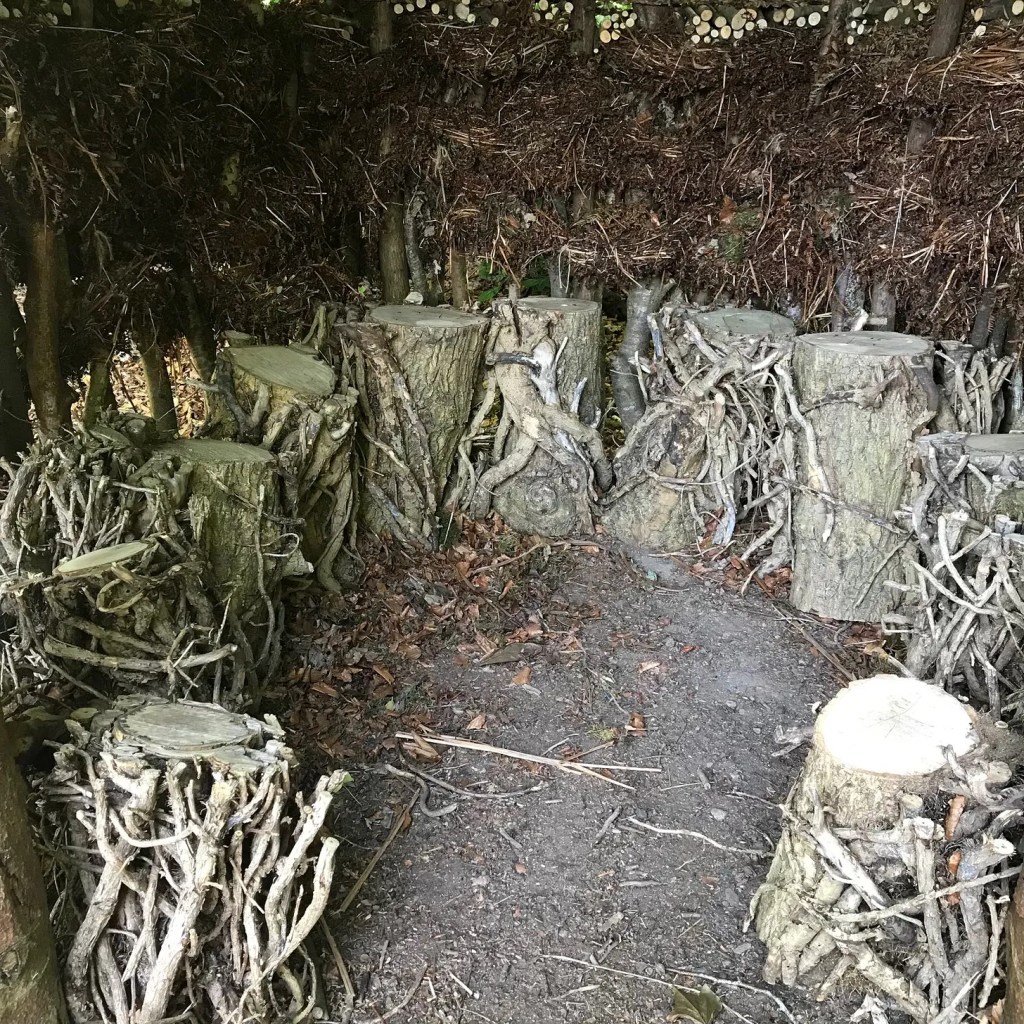
Recently I visited a friend up in Aberdeenshire. She is an artist, a craftswoman and a natural gardener; the grounds of her house are full of interesting things. This time she took me off to the far corner where there are very old conifers. A recent storm had brought down one of the oldest; she’d used the timber, and the damp crater the root bowl had created, to build a fog house.
My first thought was that this was some Calvinist version of the summer house – where we sit all afternoon, freezing our brains out, waiting for the haar to lift. But no. The fog house, a popular feature of grand gardens in Scotland in the 19th century, is a round bothy made of any handy wood or stone and thatched and lined with turf and moss – as if it has grown out of the ground. Her husband had sawed part of the trunk into sections and up-ended these to create a row of stools, big and small, along the back wall. We sat and looked out of the door, smelling the new earth, listening to the wind and the birds in the trees while our heads filled with new, silvery air ….
Junichirō Tanizaki rejoicing in the natural darkness, Sandy Hutchison in the mirk o’ Buckie, Mark Doty losing landmarks in Provincetown … carry on reading at the North Sea Poets substack.

 Lesley Harrison ~ poetry etc